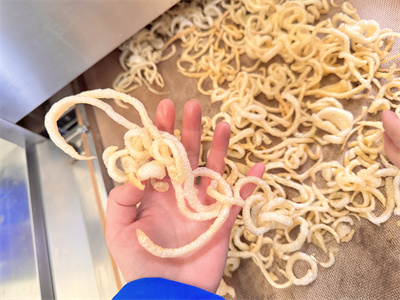
Dried pigskin is a common ingredient that becomes fluffy, crispy, and has a good taste after puffing treatment. Microwave puffing is currently a common method of puffing dried pigskin.
Let's first talk about the basic principle of microwave puffing dry pigskin. When dried pigskin is placed in a microwave device, the microwave penetrates the surface of the pigskin and directly acts on the water molecules inside it. The water molecules quickly undergo high-frequency reciprocating motion in the high-frequency electromagnetic field generated by the microwave, constantly rubbing and colliding with each other, instantly generating a large amount of heat. This process is self heating from the inside of the pigskin, rather than external heat conduction.
The moisture inside the dried pigskin quickly vaporizes upon heating, turning into water vapor. In the originally tight pigskin tissue, water vapor cannot be quickly expelled, forming a strong pressure inside, constantly squeezing the protein fiber structure of the pigskin, causing the tiny pores inside the pigskin to expand and open, and the originally dense texture gradually becomes loose and porous.
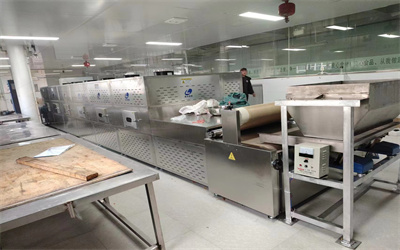
Compared to traditional frying and puffing methods, microwave puffing of dried pigskin has distinct characteristics. Firstly, the processing method and oil content are different. Deep frying and puffing require putting dry pigskin into high-temperature edible oil, relying on the heat of the hot oil to expand the pigskin. During the frying process, pigskin will absorb a large amount of oil, resulting in a high oil content in the finished product, which tastes greasy; Microwave puffing does not require contact with cooking oil throughout the entire process, which belongs to oil-free or low oil processing. The puffed pigskin has extremely low oil content and a refreshing taste, which also meets the current low-fat dietary needs.
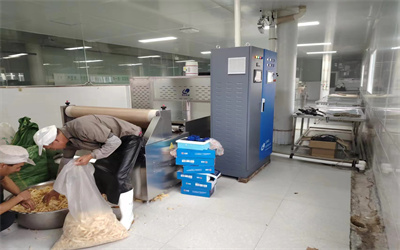
Secondly, the heating and puffing efficiency are different. Frying and puffing are external thermal conductivity, and heat slowly penetrates from the surface of the pigskin to the inside, requiring batch operations and taking a long time; Microwave puffing generates internal heat as a whole, with a fast heating rate. The pig skin is uniformly heated inside and outside, without the problem of external coke and internal generation. It can also achieve continuous processing and high puffing efficiency.
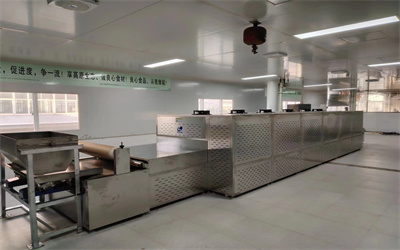
In addition, during the process of frying and puffing, the edible oil is heated at high temperatures for a long time, which can easily produce oil fumes, and there may also be oxidation and rancidity of the oil. The repeatedly used oil can affect the quality of the pigskin, and the residue produced by frying can also easily contaminate the food; Microwave puffing is carried out in a closed device, without high temperature oil and does not produce oil fumes or harmful substances. The processing environment is clean, and it can also avoid secondary pollution caused by oil and fat. Moreover, microwave heating can kill some microorganisms in pig skin, improve the hygiene and safety of ingredients. The puffed pig skin has a uniform color and will not lose too much nutrition due to high temperature frying.




 QQ
QQ