Industrial microwave tunnel ovens have fast drying speed and uniform heating, and are increasingly used in the drying and processing of ore powders. However, there are significant differences in the density, composition, and flowability of ore powder itself. In practical use, there are many details that require special attention, and reasonable operation can ensure stable drying effect and safe equipment operation.
The first thing to note is that the thickness of material placement must be uniform. Microwave is a penetrating heating method, and if the thickness of the material layer is uneven, it is easy to cause uneven drying or locally high temperatures. During production, try to spread the materials flat on the conveyor belt with consistent thickness, so that the moisture content after drying will be uniform and stable.
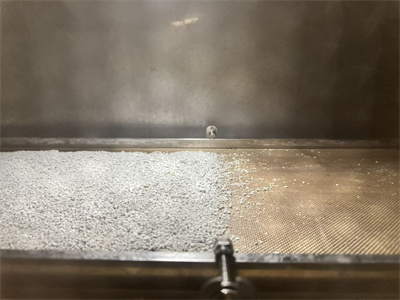
Secondly, different ore compositions should be treated differently and cannot be generalized. Some mineral powders have particularly strong microwave absorption and a very fast heating rate; Some ores have weaker absorption and slower heating. If the mixing drying or parameter settings are improper, the drying may not be thorough, and in severe cases, the local temperature may be too high, affecting the material performance. Before use, it is best to conduct small-scale machine tests based on the type of ore to determine the appropriate microwave power and conveying speed, and then proceed with formal continuous production.
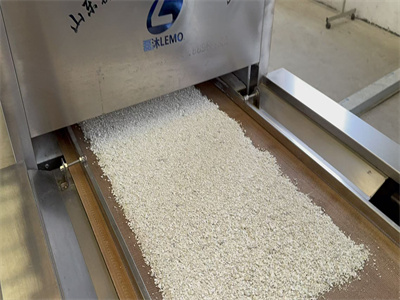
Thirdly, temperature control and prevention of overheating are crucial. The thermal conductivity of ore powder varies, and the internal temperature rises rapidly under microwave action. If the temperature is too high, powder agglomeration, sintering, and even affect the subsequent production process of the ore. During the drying process, it is necessary to control the power reasonably, avoid long-term high-power centralized heating, and cooperate with appropriate ventilation to timely remove water vapor and excess heat, so as to keep the material in a loose powder state, without clumping or agglomeration.
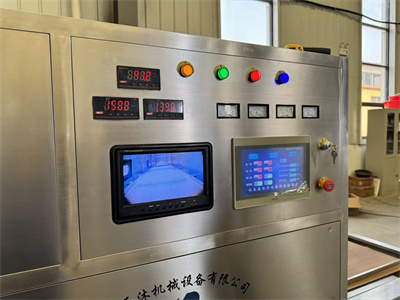
Fourthly, the moisture content and feeding state of the material should be relatively stable. If the ore powder is dry and wet, and the moisture content fluctuates greatly, it is difficult for the equipment to stably match parameters, and it is easy to have a situation where one batch is dry and one batch is wet. Try to maintain relatively uniform humidity in the incoming materials to avoid clumping and direct entry of raw materials into the equipment. Wet clumped powder should be first broken and sieved, and drying in a loose state will be safer and more thorough.




 QQ
QQ