The core adjustment idea is to indirectly control the heating effect by changing the duration and intensity of material absorption of microwave energy, which is also the mainstream operating method for adapting to microwave heating characteristics.
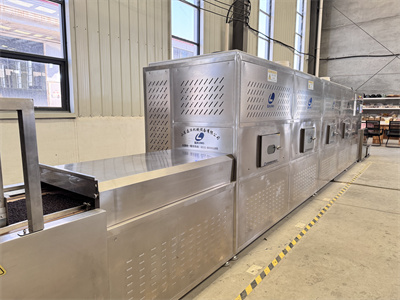
The running speed of the conveyor belt is a core regulation indicator, which determines the residence time of materials in the microwave tunnel, that is, the duration of heating. The faster the speed, the shorter the time it takes for the material to pass through the furnace, the less microwave energy it absorbs, and the shallower the heating and drying degree; The slower the speed, the longer the material stays, the more fully heated it is, and the more significant the processing effect. For example, when drying materials with high moisture content, the speed of the conveyor belt can be slowed down appropriately, the heating time can be extended, and the moisture can be fully evaporated; For heat sensitive materials, in order to avoid loss of nutrients or changes in properties, the conveying speed is accelerated, the heating time is shortened, and fast and gentle heating is achieved.
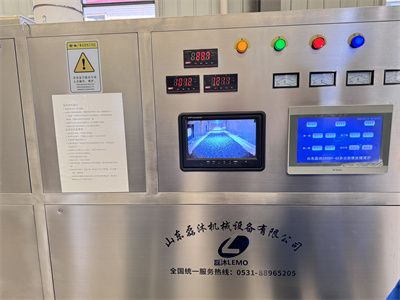
In addition, microwave power is a key parameter that determines the energy output intensity. When the temperature cannot be set, the power directly affects the heating rate and final heating degree of the material. During processing, if deeper heating, drying, or sterilization effects are required for the material, the microwave output power can be appropriately increased to enhance the molecular motion intensity of the material and accelerate heat generation; If the material is prone to burning and moisture loss is too fast, reduce the power to avoid excessive processing caused by energy overload. It should be noted that power adjustment should be gradual, and the amplitude of a single adjustment should not be too large to prevent material quality from being affected by sudden changes in heat.

On the basis of coordinated regulation of power and speed, the processing effect can also be refined by optimizing the material's own state and auxiliary processing conditions. The thickness of the material directly affects the microwave effect. Operators need to adjust the thickness of the material according to its characteristics to ensure even microwave penetration and uniform heating of the material as a whole. At the same time, a large amount of water vapor is generated during the processing of some materials. It can be adjusted by adjusting the dehumidification air volume of the furnace body to timely discharge moisture, avoid water vapor reflux affecting drying efficiency, prevent material moisture regain, and further stabilize the processing state.




 QQ
QQ